


Pizza 4 Launch
Overview
My Role
Pizza 4 Launch is an original animated short film that follows a humorous space mission centered around delivering pizza beyond Earth. The project combined 2D animation, visual storytelling, motion graphics, sound design, and video editing to create a complete narrative experience from concept to final production.
Developed as a multimedia project, the film required planning scenes, designing visual assets, animating characters and environments, editing sequences, and producing supporting audio. The project provided hands-on experience in animation workflows while demonstrating how multiple creative disciplines can be combined to produce an engaging final product.
A unique aspect of the project was the creation of all audio assets using self-recorded harmonica performances. Through recording, editing, layering, and audio manipulation, these recordings were transformed into background music, ambient effects, and even spacecraft sound effects, creating a fully original audiovisual experience.
• Animator
• Motion Graphics Designer
• Visual Storyteller
• Sound Designer
• Audio Editor
• Video Editor
• Asset Designer
• Creative Director
Watch the Final Video

Story Development
The animation project began with a creative prompt that served as the foundation for the story. After evaluating several possible concepts, I selected the idea of an alien pizza delivery driver navigating obstacles in space and developed it into a complete narrative using a three-act story structure.
To ensure the story remained clear and engaging within the project's one-minute runtime, I created a three-sentence summary that established the setup, conflict, and resolution of the film. This process helped identify the core story beats and provided a framework for planning the animation.
Once the overall narrative was defined, I expanded the concept into a detailed scene-by-scene outline. Each major action, visual moment, and story event was planned before production began, creating a roadmap that guided storyboarding, asset creation, and animation development.
By documenting the story structure and sequence of events during pre-production, I established a clear production plan that helped maintain pacing, support visual storytelling, and keep the project focused from concept through final delivery.

Character Development
The main character was developed through an iterative design process that explored multiple shapes, proportions, and visual styles before arriving at the final design. Early concept sketches focused on experimenting with different body structures, facial features, and silhouettes to determine which designs were the most visually appealing and easiest to animate.
In addition to the character's appearance, I developed a basic personality and backstory to help guide design decisions. The character was envisioned as an alien pizza delivery driver working for Pizza 4 Launch, creating a foundation that influenced the character's expressions, behavior, and role within the story.
As the design evolved, unnecessary details were simplified to improve readability and animation efficiency. The final character maintained a distinct silhouette and recognizable personality while remaining practical for animation production. This process demonstrated how character design often requires multiple rounds of sketching, evaluation, and refinement before a successful solution is reached.
By moving from rough concept sketches to a polished final design, I established a character that supported both the visual style and storytelling goals of the project.

Final Character
The final character was designed to be energetic, approachable, and visually memorable. A slim body shape and pointed features were used to create a sense of movement and high energy, helping reinforce the fast-paced nature of the story and the character's role as a pizza delivery driver racing against time.
To support the humorous tone of the animation, the character incorporates several pizza-inspired design elements. The triangular head resembles a slice of pizza, while the circular cheeks reference pepperoni toppings. These visual details help connect the character directly to the film's central theme while creating a recognizable and unique silhouette.
The character's expressions and body language were designed to communicate a playful and slightly mischievous personality. By combining simple shapes, bright colors, and exaggerated proportions, the final design remained easy to animate while effectively supporting the storytelling and overall visual style of the project.

Storyboards
Before animation production began, the entire film was planned through a detailed storyboard process. Each scene was sketched and documented to establish camera angles, character actions, timing, and visual storytelling before asset creation and animation started.
Creating storyboards allowed me to evaluate pacing, identify potential production challenges, and verify that the narrative could be effectively communicated within the project's one-minute runtime. This planning stage served as a visual blueprint that guided every phase of production, from animation and sound design to final editing.
Boards 1 - 18
Purpose: Establishing the Story & Visual Direction
The first eighteen storyboard panels focused on introducing the main character, establishing the setting, and presenting the central conflict. During this phase, I explored camera composition, visual hierarchy, and environmental design while determining how information would be communicated to the audience.
These boards helped define the overall visual language of the animation and provided the foundation for the remaining production stages.


Boards 19 - 36
Purpose: Developing Action & Rising Tension
The second storyboard sequence focused on the escalation of the story's conflict. Character actions, environmental obstacles, and key story beats were mapped out to maintain pacing and audience engagement throughout the middle portion of the film.
By visualizing these scenes in advance, I was able to refine transitions between shots and ensure the animation maintained a clear sense of progression toward the climax.


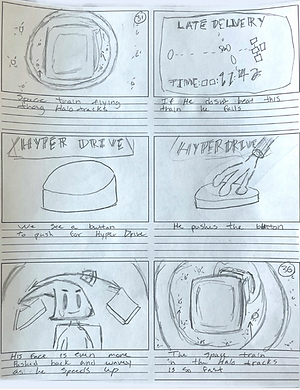
Boards 37 - 54
Purpose: Resolution & Final Sequence Planning
The final storyboard panels focused on the story's resolution and conclusion. These boards detailed the climax, final character actions, and ending scenes while helping verify that the narrative reached a satisfying conclusion within the target runtime.
Completing the full storyboard sequence allowed the entire animation to be reviewed before production began, reducing uncertainty and providing a clear roadmap for asset creation, animation, sound design, and editing.


Animatic Development
Before creating the final animation, I assembled the storyboard panels into a timed animatic to evaluate pacing, visual storytelling, and audio synchronization. This stage allowed me to test how scenes flowed together while determining where sound effects, music, and key story moments would occur throughout the film.
The animatic served as a production blueprint, helping identify timing adjustments before animation began. By combining storyboards with preliminary sound design, I was able to refine scene transitions, strengthen comedic moments, and verify that the complete narrative could be effectively communicated within the one-minute runtime
Watch the Animatic
This animatic combines all 54 storyboard panels into a timed sequence with early sound design and music cues. It was used to establish pacing, plan audio placement, and validate storytelling decisions before moving into full animation production.
Developing the animatic allowed visual and audio elements to be evaluated together, creating a clear roadmap for the final animation, sound design, and post-production workflow.

Assets and Scenes
Purpose: Vector Asset Creation & Environment Design
Before animation production began, the visual assets for the project were created in Adobe Illustrator. Individual vector graphics were developed for characters, spacecraft, user interface elements, environmental objects, and supporting scene components that would appear throughout the animation.
Creating assets as separate vector elements allowed them to be reused across multiple scenes while maintaining a consistent visual style. This approach also made it easier to modify individual components during production without rebuilding entire scenes, creating a more efficient animation workflow.
Once assets were completed, they were assembled into scene layouts that translated storyboard concepts into finished environments. Space stations, traffic systems, cockpit displays, delivery interfaces, and other visual elements were designed to support the story while reinforcing the playful science-fiction theme of the film.
Developing the project in Adobe Illustrator provided scalable vector artwork that could be imported into the animation pipeline while maintaining clean lines and consistent visual quality. Organizing assets into reusable components helped streamline production and supported efficient scene construction throughout the project.
